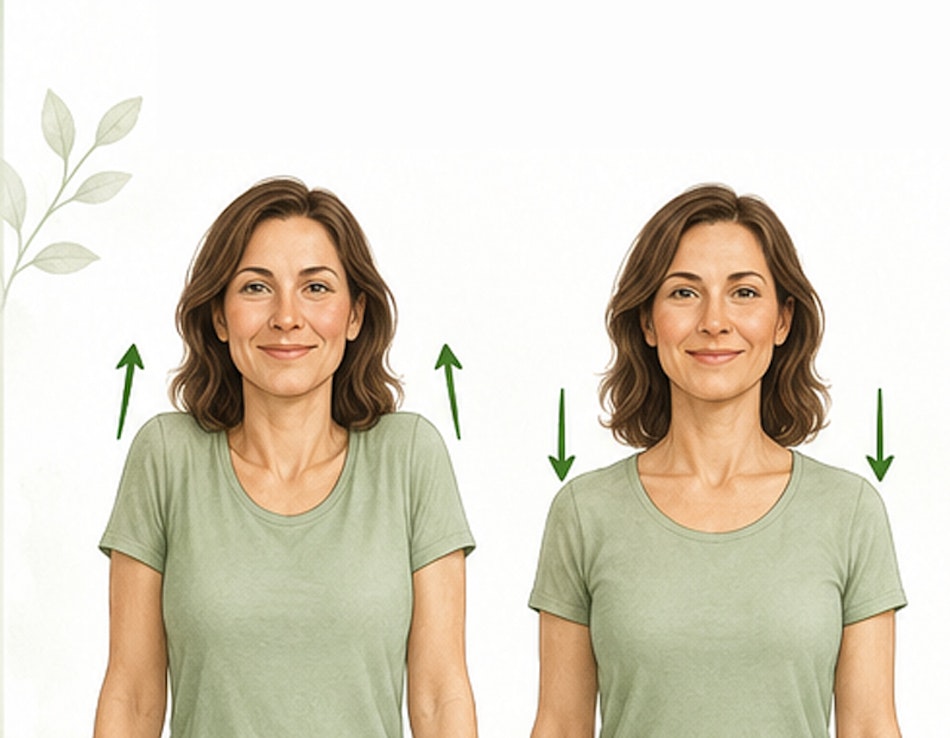
Lower your shoulders
Sit or stand up straight. Gently pull your shoulders toward your ears, hold for a moment, and then let them drop slowly. Repeat several times.

Neck pain is common. It’s often caused by tense muscles in the neck and shoulder area. Sitting for long periods, working at a computer, stress, an awkward sleeping position, or looking down at a smartphone can put a lot of strain on the neck.
Sometimes the pain is limited to the neck. However, it can also radiate to the shoulders, the back of the head, the arms, or the jaw. If the symptoms are severe, recurring, or accompanied by numbness, tingling, or a fever, you should see a doctor for an evaluation.
The cervical spine is very flexible and supports the head. At the same time, the neck muscles are sensitive to uneven strain, poor posture, and stress.
Common causes include:
In many cases, the pain is nonspecific neck pain. This means there is no single, clearly identifiable cause; rather, several factors are at play.
When working at a computer, the head is often pushed forward. This increases the strain on the cervical spine, neck muscles, and shoulders. Working for long periods without breaks can also cause the muscles to remain constantly tense.
Here are some tips that might help:
Stress often manifests itself in the neck. Many people unconsciously shrug their shoulders, clench their teeth, or tense their jaws. Since the jaw, neck, and shoulder muscles work closely together, jaw tension or teeth grinding can exacerbate neck pain.
The following may be helpful:
In cases of acute neck stiffness, gentle movement is usually better than complete rest. It is important to avoid sudden movements and not to overexert the neck.
Here are some tips that might help:
Heat is especially soothing when discomfort is caused by muscle tension or cold. If there are signs of inflammation, an injury, or severe pain, the cause should be determined.
Sit or stand up straight. Gently pull your shoulders toward your ears, hold for a moment, and then let them drop slowly. Repeat several times.

Straighten up and imagine that the crown of your head is gently being pulled upward. Tilt your chin back slightly without tilting your head too far.

Slowly turn your head to the right and to the left. Only as far as feels comfortable. Keep your shoulders relaxed.

Slowly roll your shoulders back and then forward. Keep breathing calmly.
If you experience dizziness, radiating pain, numbness, or severe discomfort, you should stop the exercises and consult a medical professional.
If you experience dizziness, radiating pain, numbness, or severe discomfort, you should stop the exercises and consult a medical professional.
Even at night, your neck can be under strain. A pillow that’s too high, sleeping on your stomach, or a twisted head position can lead to stiffness and pain in the morning.
The following are helpful:
Arnica (Arnica montana) is the appropriate medicinal plant for this page when neck pain is accompanied by localized muscle and joint discomfort, tension, or neck stiffness.
A.Vogel AtroGel For external use to relieve pain and inflammation in the joints and muscles, such as muscle tension and a stiff neck. This is an approved medication. Read the package insert.
A medical evaluation is recommended in the following cases:

